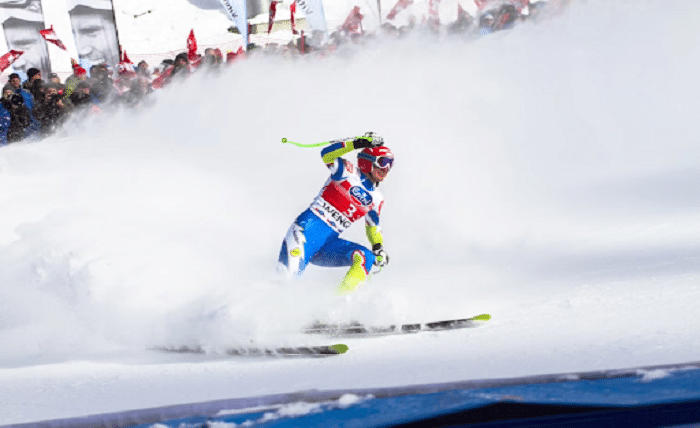
Winter sport does not wait for winter. On 24 October, the Rettenbach glacier above Sölden hosts the season-opening giant slalom of the Alpine Ski World Cup, six weeks before most European resorts even open their lower slopes. At 2,700 metres, the glacier holds enough compacted snow from the previous season to build a full race piste while valley towns are still logging autumn rain.
Fans who track the calendar closely have grown used to following results the same way they follow football scores – through apps that update bib numbers and split times in real time. Betting platforms such as x3bet have built dedicated ski sections for exactly this kind of event, listing start lists and live intermediate gaps alongside the odds, which is often the fastest way a casual viewer learns who is actually leading a run before the broadcast catches up.
Why Sölden Opens Every Season
The Rettenbach has hosted the opener since 1993, interrupted only twice by warm autumns and once by the pandemic calendar shuffle in 2020. Its north-facing bowl traps cold air even when the valley below sits at 12 degrees, which is the physical reason organisers keep coming back rather than rotating the opening slot elsewhere. Course crews start snow farming in April, covering last season’s leftover base under reflective fleece to slow the summer melt.
By late September they have roughly 25,000 cubic metres of stored snow to reshape into a 1,350-metre course, a logistics operation that costs the Ötztal valley close to two million euros a year to run. A few details explain why this particular race draws attention before the season has properly begun:
- Course length sits near 1,350 metres, short enough that one mistake near the top rarely gets erased later.
- Start times are pushed to late morning so sunlight softens the top layer, changing conditions between the first and last competitors.
- Both men’s and women’s giant slalom run on the same weekend, giving broadcasters a rare double-header this early in October.
How the Points Race Begins to Take Shape
A giant slalom win in Sölden carries the same 100 World Cup points as any other GS during the season, but its psychological weight is larger – it sets the tone for how a skier’s technical form looks heading into December’s speed events. The table below breaks down how the opening weekend typically compares with a mid-season stop.
| Aspect | Sölden opener (October) | Mid-season GS (January) |
| Snow surface | Man-made, glacier-stored | Fresh groomed piste |
| Typical air temperature | -2°C to 4°C | -10°C to -2°C |
| Field size | Often 90+ starters | Usually 60-70 starters |
| Points available | 100 (winner) | 100 (winner) |
| TV markets covered | Over 60 countries | Varies by stop |
Giant Slalom Sets the Technical Baseline
Coaches use the Sölden result less as a prediction and more as a diagnostic. A skier who struggles with edge grip on the softened glacier snow often reveals a ski tuning issue that a team can still correct before December’s harder, colder rounds in North America.
That is also why start numbers matter so much here. Athletes outside the top 30 face a course already rutted by a hundred earlier runs, and the time gaps this produces are frequently larger than anything seen later in the season on firmer snow.
Equipment Choices Shift for Glacier Racing
Ski servicemen bring softer wax formulas built for the wetter, grainier glacier snow rather than the cold-weather waxes used later in winter. Getting this wrong costs measurable time – technicians estimate a poor wax match can add half a second over a 1,350-metre course.
Boot setups also change slightly, with several World Cup technicians tightening forward lean to compensate for the softer surface underfoot. It is a small adjustment invisible to viewers but one that separates podium finishers from the rest of the top ten most seasons.
Broadcasting Turns a Glacier Race Into a Global Event
Production trucks arrive a full week before the race to lay fibre along the mountainside, since satellite links alone cannot handle the number of camera angles modern broadcasts demand. Around 30 cameras cover the course, more than double what a mid-season stop typically uses.
The result reaches an audience far beyond traditional ski nations. Streaming numbers from recent openers show meaningful viewership growth in markets with no snow at all, driven partly by how easy it now is to follow live timing, odds and commentary from a single phone screen rather than a television broadcast alone.